Cases / SMILY
SMILY
Communication followed the customer, not the calendar
- Go-to-market
- CRM & Lifecycle
- Marketing Automation
- Paid Growth
- Creative
SMILY launched as a new direct-to-consumer brand in invisible braces.
The customer journey was more complex than a normal ecommerce purchase. From initial interest, prospective customers had to move through several stages, including sign-up, an online test, a booking and on towards treatment. That meant acquisition could not stand alone. Marketing had both to create demand and to help the customer through a longer decision process.
I therefore worked with go-to-market, marketing strategy, acquisition, communication, creative and marketing automation as parts of one customer journey.
My role: From go-to-market to the actual customer dialogue. Go-to-market strategy, marketing plan, acquisition and paid media, customer journey and lead journey, marketing automation, email communication, website and conversion journey, campaign concepts, creative direction, copywriting and coordination of the design work. Both a strategic and a hands-on engagement. A central part was making sure that the communication customers received after acquisition reflected what they had already done, and what the next relevant step was.
Leads, ROAS and revenue are results of the overall go-to-market and marketing effort and should not be attributed to marketing automation alone.
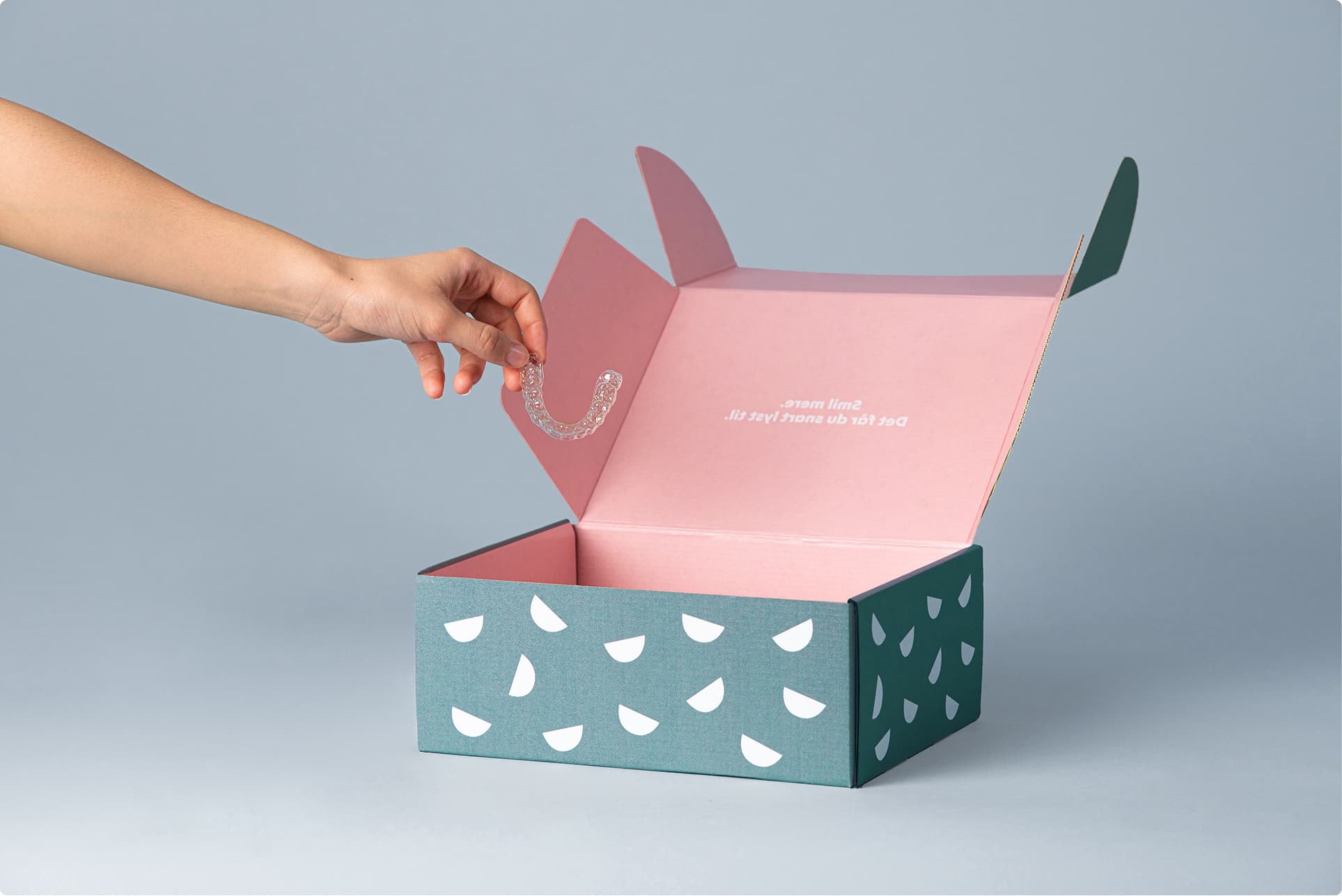

Four disciplines within one case
The marketing model built together with the customer journey from day one.
02Customer journey & triggersJourney design based on sign-up, online test, booking and customer status.
03CRM & marketing automation6 automations and 100+ emails and SMS in ActiveCampaign.
04Paid, website & creativeAcquisition, conversion journey and brand planned together with CRM.
01Go-to-marketThe marketing model had to be built together with the customer journey.
SMILY was a new brand without an existing marketing engine that simply needed optimising. We had to establish the following from the start:
- Positioning
- Acquisition
- Website
- Lead generation
- Customer dialogue
- Automation
- Creative
- Measurement
That made it possible to build the customer journey into the marketing model early. Rather than generating leads first and working out afterwards how to handle them, acquisition, website and CRM could be developed as parts of the same journey. Communication could then change depending on where the customer actually was.
Go-to-market strategy and marketing plan as Head of Marketing at Checkmate.
Website and conversion journeyThe website was part of the journey, not just a digital brochure. It had to explain a relatively complex product, build trust and help the customer towards the next action. I worked with the connection between:
- Marketing message
- Website
- Lead generation
- Online test
- Booking
- CRM communication
The goal was for the transition from ad to website and on to CRM to feel like one customer journey. It also made website behaviour and customer stage relevant as input to the subsequent communication.
02Customer journey & trigger-based communicationA single lead could be in many different places.
A sign-up did not in itself say enough about the customer’s situation. A person might have signed up, taken an online test, booked an appointment, not yet booked, moved further into treatment or responded differently to earlier communication.
DecisionThat required a model in which communication could respond to the customer’s progression. I worked with journey design based on sign-up, online test, booking, behaviour and customer/treatment stage.
Instead of planning “Which email do we send on Thursday?”, the question became: “What is the relevant next step for this customer?” That is the core CRM logic of the case.
Trigger-based communicationWhen a customer journey has several stages, timing becomes critical. A generic newsletter does not necessarily know what the customer has already done. Trigger-based communication, on the other hand, could respond to changes in the customer’s status.
A customer who had already booked should not necessarily receive the same communication as someone who still needed to be motivated to book. The CRM setup had both to communicate and to keep track of progression through the journey.
- 01 · Sign-upInterestLead from an ad or the website
- 02 · Online testTest answers decide the next step
- Likely suitableBookingReminders ahead of the appointmentUnsureConsultationSuitability, treatment and price are assessed
- 03 · TreatmentTreatment journeyHand-over, use of aligners and final check-up
03CRM & marketing automation6 automations and more than 100 emails and SMS.
The marketing automation setup was built in ActiveCampaign. Six automated journeys were established, with more than 100 emails and SMS in total. Communication could change depending on the customer’s actions and position in the journey, for example by:
- following up after sign-up
- helping a lead towards the next step
- responding to the online test
- following up around booking
- changing the communication as the customer progressed
- using behaviour as a signal for the next communication
The automations were not built as six isolated email series, but as different parts of one larger lead-to-customer journey.
From data to next actionSMILY is an early example of the way of working that later became central to my CRM work:
The setup was not on the same data scale as Billetto, for example. But it clearly shows the principle of letting the customer’s actions drive the communication. That is the difference between using marketing automation as an email scheduler and as an engine for the customer journey.
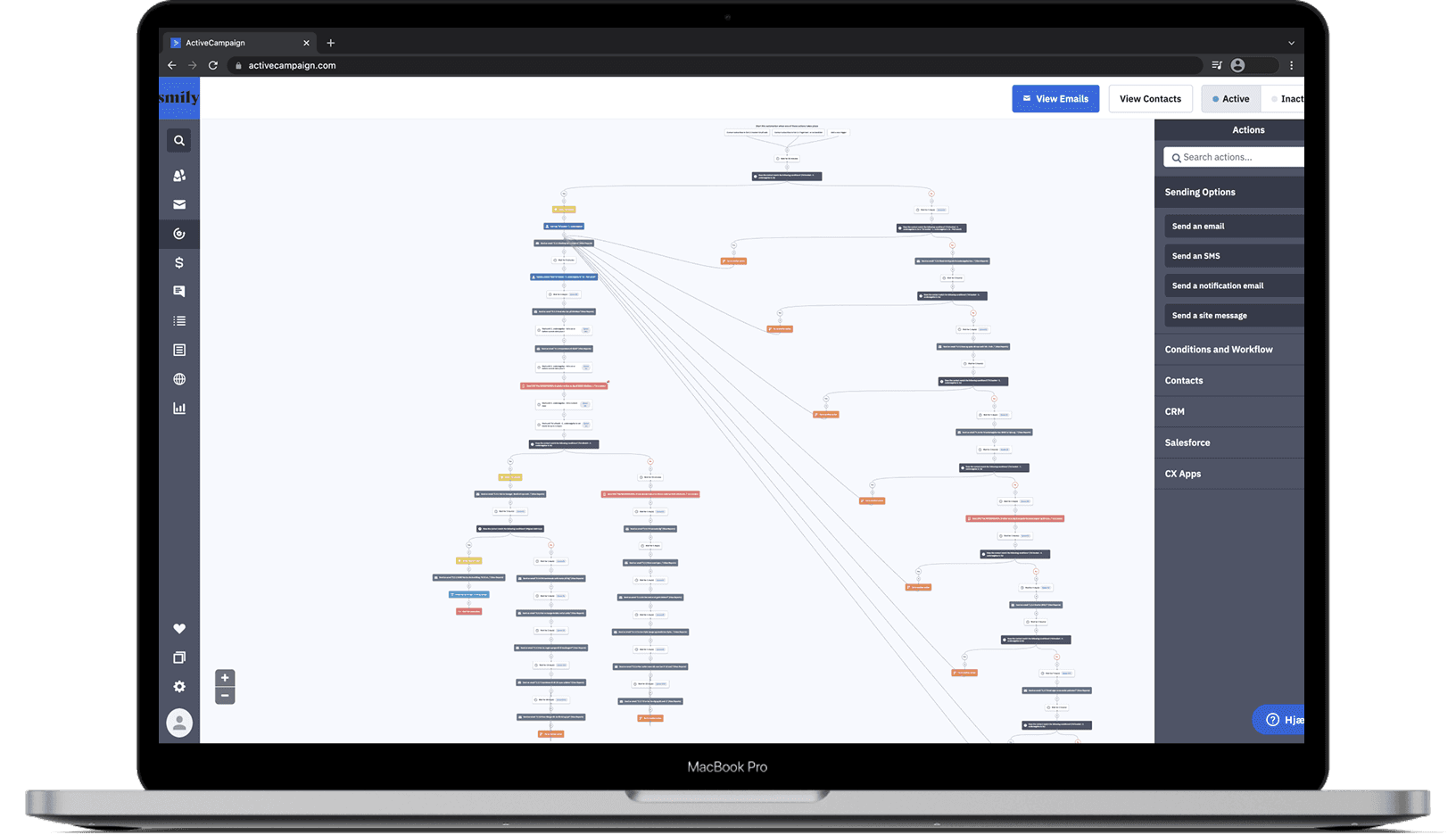
ActiveCampaign · automation flow.
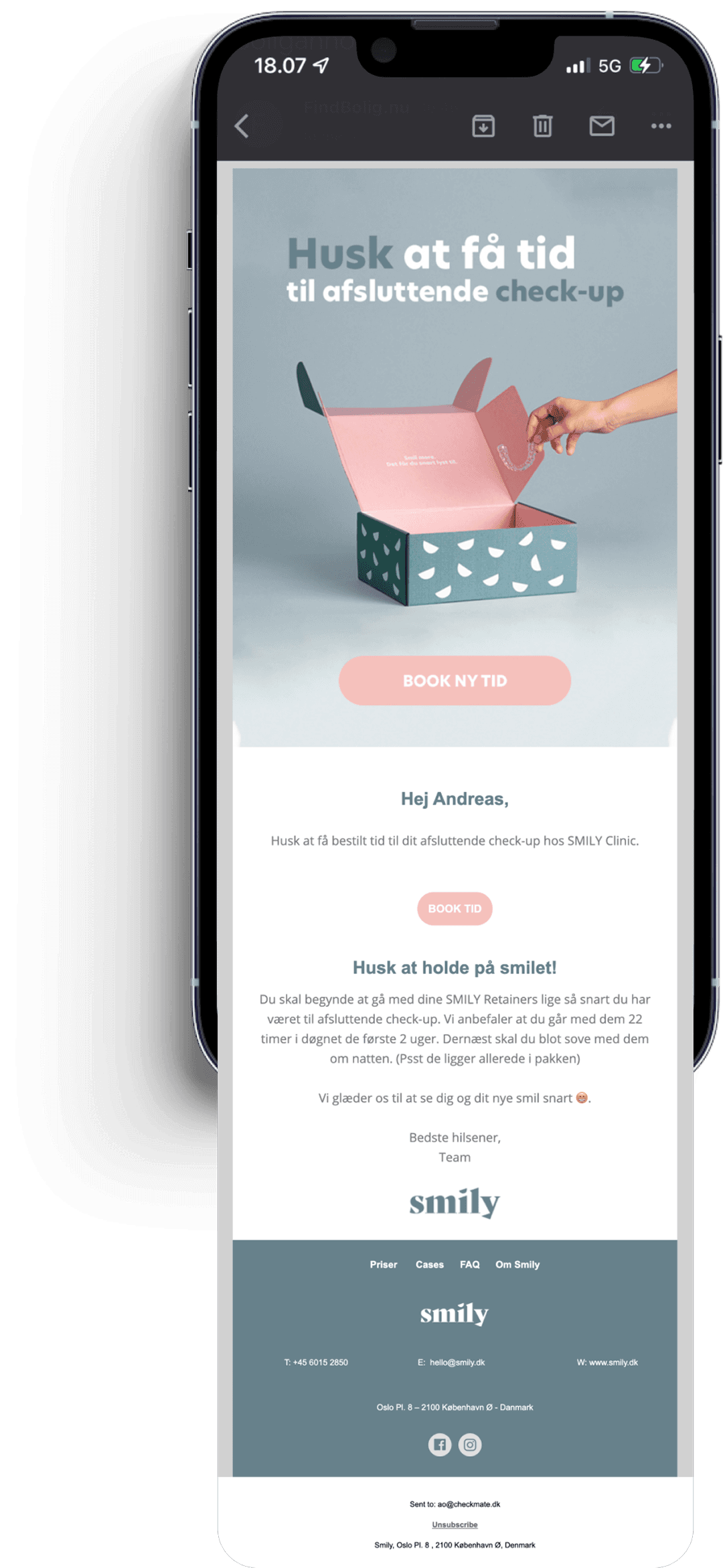
Reminder during treatment.
04Paid, website & creativeLead generation was the beginning, not the goal.
SMILY generated more than 8,000 leads during the launch period. But a lead only had real commercial value if the marketing model could also help the person onwards. Paid marketing had to create relevant interest and leads, the website had to help the customer understand the product and take the next action, and marketing automation had to continue the dialogue based on what we knew about the customer’s situation.
It is this connection between acquisition and lifecycle that makes the case relevant as both a growth case and a CRM case.
SMILY launched a product that prospective customers needed to understand and feel confident about before taking the next step. Creative therefore had to do more than attract attention. It also had to:
- Explain the product
- Make the concept easy to understand
- Build the brand
- Create recognition
- Support acquisition
- Tie ads, website and CRM together
I worked with the marketing concept, communication, copy and creative direction, as well as with the design work around campaigns and brand. The visual and communicative world was used across paid, website and customer dialogue.
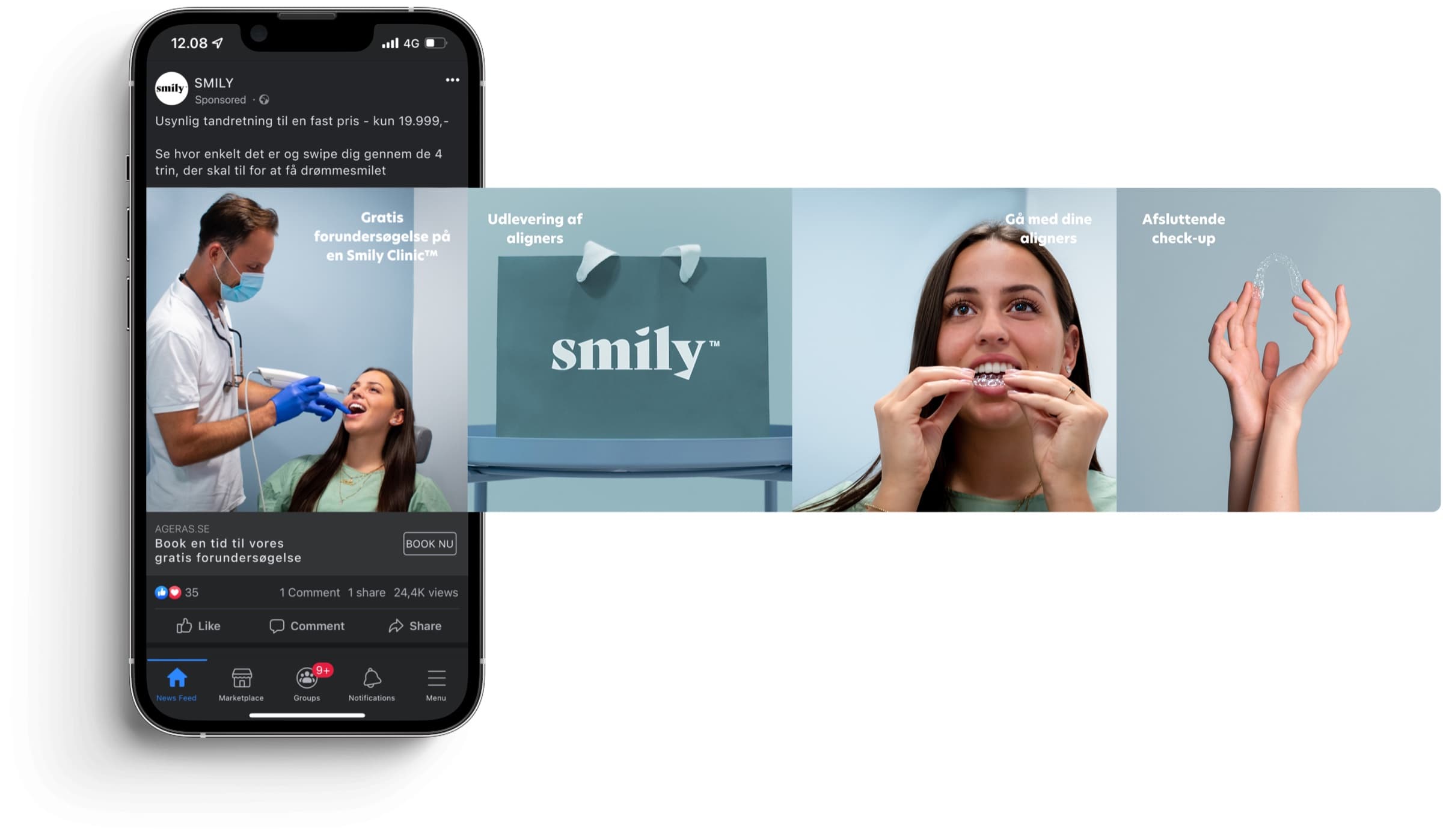
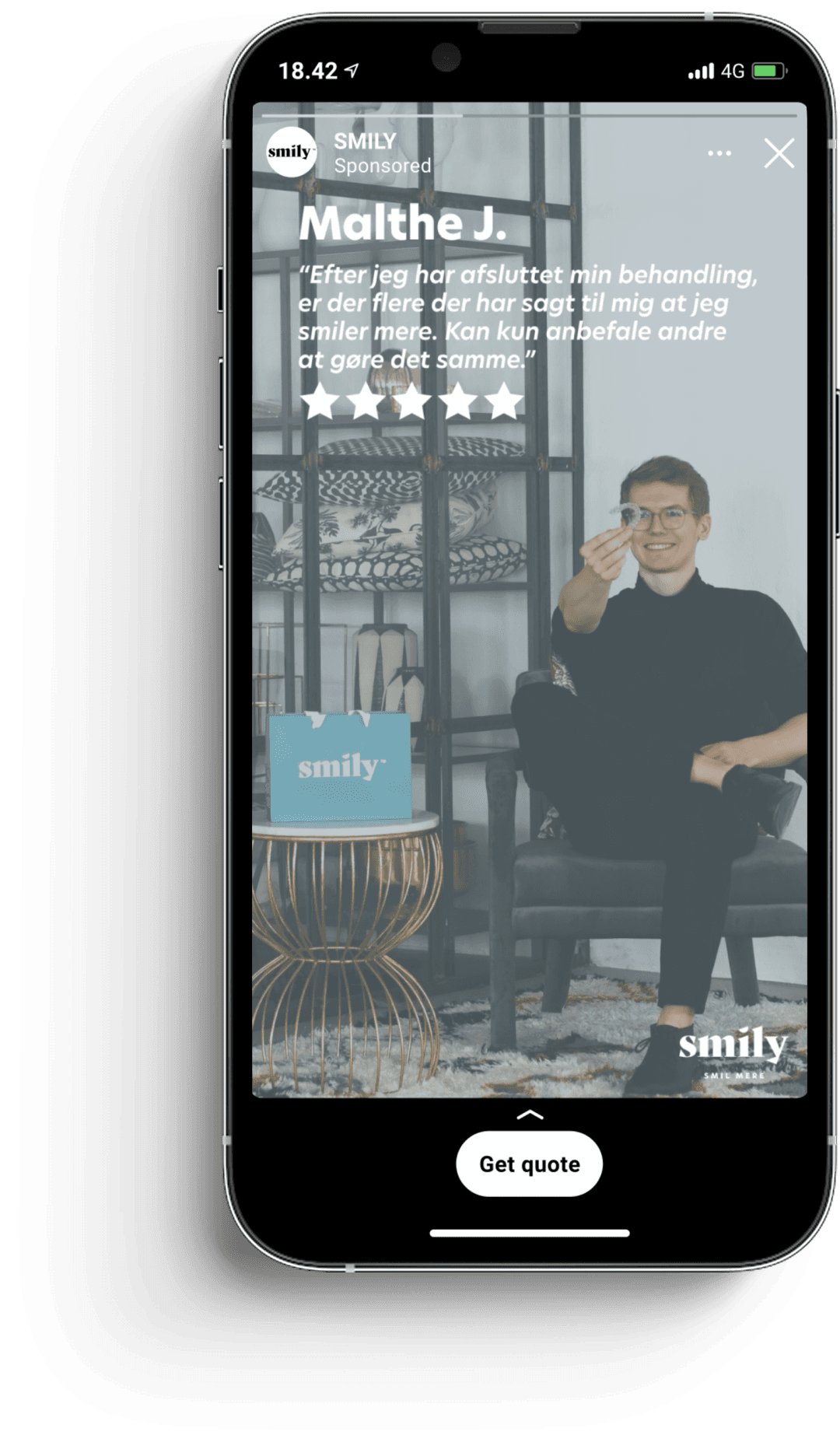
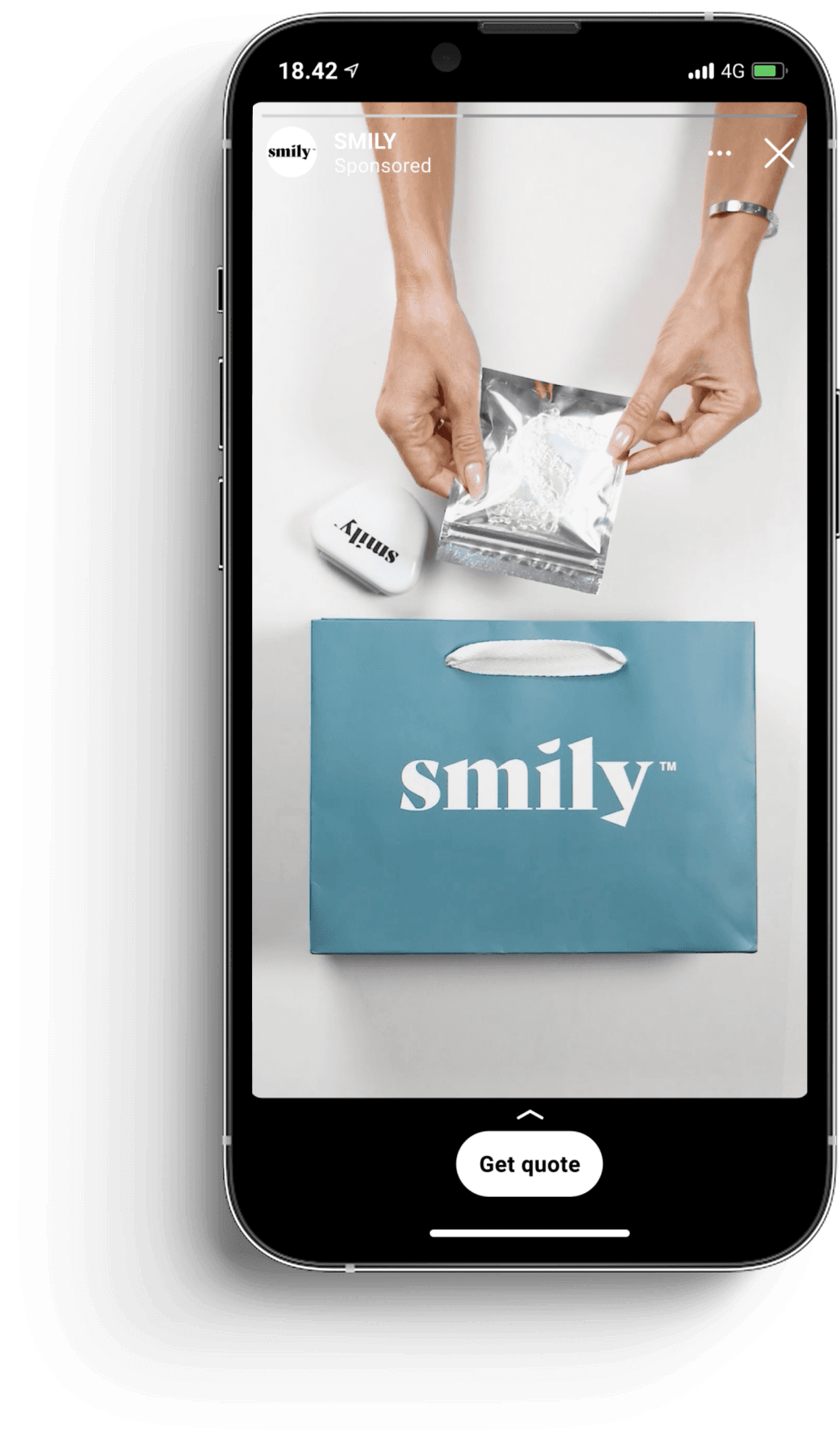
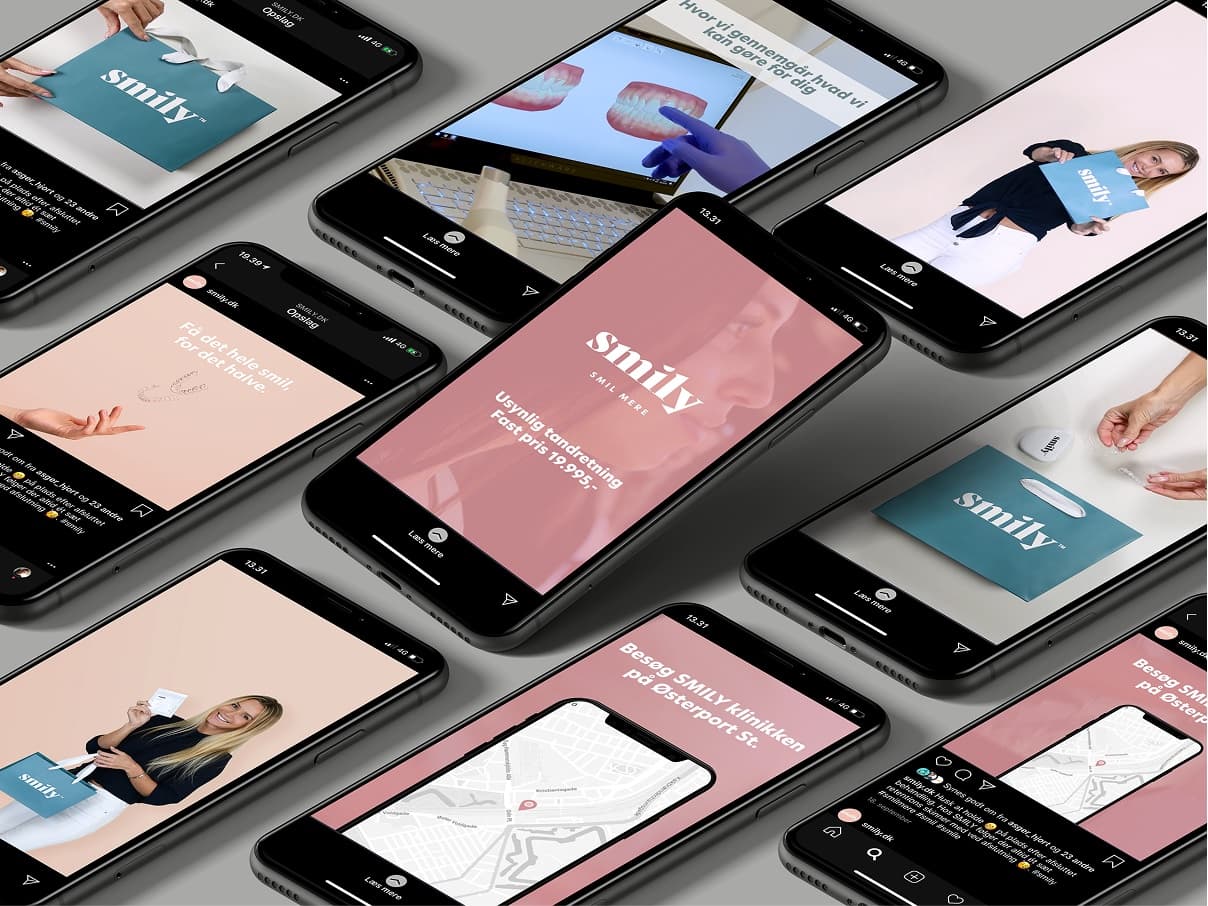
Ads, stories, videos and campaign world in the same visual and communicative world as the website and customer dialogue.
What the case shows
Communication was structured around the customer’s progression through a multi-stage journey.
6 automations and 100+ emails and SMS were built in ActiveCampaign.
Sign-up, online test, booking, behaviour and customer/treatment stage were used as input to the communication.
Lead generation and automation were planned as different parts of the same conversion journey.
Marketing strategy, acquisition, website, CRM and creative were developed as parts of launching a new D2C brand.
Strategic marketing work combined with hands-on communication and automation.
A customer journey built from acquisition to the next action
The SMILY case shows in particular the value of building CRM in early. Marketing automation was not added after the launch as a separate email channel. It was built as part of the customer journey itself.
For me, the most important point is the structure behind the numbers: communication was driven by where the customer was in the journey, not just by the marketing calendar.
Working with a multi-stage customer journey?
If leads move through booking, assessment, onboarding or other stages where communication needs to change along the way, you are welcome to get in touch.
View more cases →Looking for someone with this mix of CRM, growth and marketing experience? Let’s talk.
Senior roles · Interim · Selected projects